
Thursday, 29 May 2014
Grammar: Be
The verb be is very important in English. Some languages don't have the verb be, but in English, we use it a lot. It's important that you learn this verb.


Wednesday, 21 May 2014
Punctuation: full stops and capital letters
At the beginning of every sentence, you need to use a CAPITAL LETTER. We also use capital letters for names of:
people countries cities languages nationalities companies months days roads and streets attractions (eg art galleries, museums, shopping centres)

people countries cities languages nationalities companies months days roads and streets attractions (eg art galleries, museums, shopping centres)

Elementary Reading Website Links
Here are the links to the websites we talked about in class today.
First, here is a link to the Cambridge online dictionary:
http://dictionary.cambridge.org/dictionary/essential-british-english/
English Test Store has 35 reading tests. Do one every day:
http://englishteststore.net/index.php?option=com_content&view=article&id=33&Itemid=31
News In Levels has easy to read news stories every week. Listen to the recording and try and write the first few sentences. Check your spelling and sentences with the reading text. Do one every week:
http://www.newsinlevels.com/
There are lots of graded readers in the Study Centre. Read one every week and complete the activities:
http://www.amazon.co.uk/s/ref=nb_sb_noss_1?url=search-alias%3Daps&field-keywords=graded%20readers%20level%202&sprefix=graded+readers+level+2%2Caps&rh=i%3Aaps%2Ck%3Agraded%20readers%20level%202
First, here is a link to the Cambridge online dictionary:
http://dictionary.cambridge.org/dictionary/essential-british-english/
English Test Store has 35 reading tests. Do one every day:
http://englishteststore.net/index.php?option=com_content&view=article&id=33&Itemid=31
News In Levels has easy to read news stories every week. Listen to the recording and try and write the first few sentences. Check your spelling and sentences with the reading text. Do one every week:
http://www.newsinlevels.com/
There are lots of graded readers in the Study Centre. Read one every week and complete the activities:
http://www.amazon.co.uk/s/ref=nb_sb_noss_1?url=search-alias%3Daps&field-keywords=graded%20readers%20level%202&sprefix=graded+readers+level+2%2Caps&rh=i%3Aaps%2Ck%3Agraded%20readers%20level%202
Wednesday, 14 May 2014

Thursday, 1 May 2014




Wednesday, 30 April 2014
Spelling: Plurals
Do you need to practise spelling plural nouns? This game can help you.
Remember, for most words + s
If the word ends with vowel + y + s
If the word ends with consonant +y + ies
If the word ends with sh, ch, s, z, x or o + es
This is true for 3rd person verbs too: Carlos watches TV. Martha goes to the cinema. Saddam studies every day.
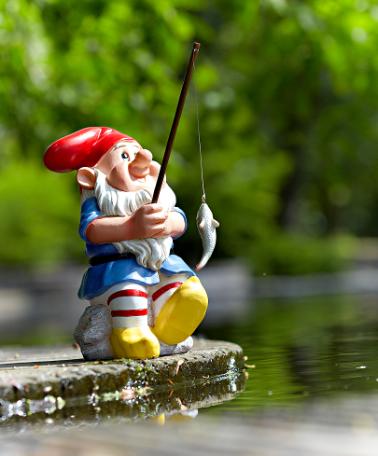
Here is the link for the game: http://www.bbc.co.uk/skillswise/game/en16plur-game-plural-fishing
 |
| (image: http://fallingrock1.files.wordpress.com/2012/03/gnome-fishing.jpg) |
If the word ends with vowel + y + s
If the word ends with consonant +y + ies
If the word ends with sh, ch, s, z, x or o + es
This is true for 3rd person verbs too: Carlos watches TV. Martha goes to the cinema. Saddam studies every day.
Here is the link for the game: http://www.bbc.co.uk/skillswise/game/en16plur-game-plural-fishing
Thursday, 24 April 2014
Grammar: Possessives
We often want to talk about things people own or possess. We can do this by using a possessive adjective, or by using the person's name or job +'s (apostrophe s) .


Wednesday, 23 April 2014
Grammar: a/an/the
We often need to use a, an or the when we talk about nouns.
We use a with consonant sounds. For example, computer, pen, teacher, banana
We use an with vowel sounds. For example, orange, apple, umbrella.
 | |
| (image: http://www.kienthucduhoc.com) |
We use an with vowel sounds. For example, orange, apple, umbrella.
Reading: People and places
In the class, we read about Isabel from Peru. She lives in Arequipa:
 |
| (image: http://www.ucsp.edu.pe) |
Tuesday, 22 April 2014
Vocabulary: Nationalities
Here are some links to practise vocabulary for nationalities:
1. https://elt.oup.com/student/englishfile/elementary/b_vocabulary/bank02/?cc=gb&selLanguage=en
2. https://elt.oup.com/student/result/engelem/b_vocabulary/unit03/?cc=gb&selLanguage=en
 | |||
| (image: http://englishinaction1-stlisieux.blogspot.co.uk/2013/01/unit-3-countries-nationalities-languages.html) |
2. https://elt.oup.com/student/result/engelem/b_vocabulary/unit03/?cc=gb&selLanguage=en
Saturday, 19 April 2014
Game: Any/Some/Countable Nouns
Here is a little game to practise any/some/a/an: https://elt.oup.com/student/result/engelem/c_games/game_03?cc=gb&selLanguage=en


Have or Has?
Have is an irregular verb in the present: I have, you have, he has. we have, they have. A lot of students find this difficult to remember.
 The negative of he has is ..... ?

Present simple tense
We use the present simple tense to talk about facts which are always true, and to talk about daily routines and habits. For example;
I get up in the morning at 7 o'clock, and I go to work at 8.15. We have a break around 10 o'clock and the lesson finishes at 11.30. I teach an elective class until 1 o'clock. In the afternoon, I plan the next lesson and mark homework, but on Wednesdays, I go to university.

I get up in the morning at 7 o'clock, and I go to work at 8.15. We have a break around 10 o'clock and the lesson finishes at 11.30. I teach an elective class until 1 o'clock. In the afternoon, I plan the next lesson and mark homework, but on Wednesdays, I go to university.
Vocabulary: Food
Here is a link to some games and activities to practise food and drink vocabulary: https://elt.oup.com/student/result/engelem/b_vocabulary/unit06/?cc=gb&selLanguage=en
 Can you name all the vegetables in the picture?
Here is another link to more practise: https://elt.oup.com/student/englishfile/elementary/b_vocabulary/bank14/?cc=gb&selLanguage=en

Here is another link to more practise: https://elt.oup.com/student/englishfile/elementary/b_vocabulary/bank14/?cc=gb&selLanguage=en
Tuesday, 15 April 2014
Grammar: Past tense practice
When we want to talk about actions which started and finished in the past, we use a past simple tense. Verbs can be regular or irregular.


Thursday, 3 April 2014
Listening websites
Do you need to practise your listening skills? Here are some websites that can help you:

People: I/you/he/she/it/we/they (Personal pronouns)
When we use verbs, we need to say who is doing the action. Sometimes it is one person (singular), sometimes it is more than one person (plural).


Verbs
We use verbs to talk about actions. For example, fly, arrive, come, study, read, write


We use verbs to talk about different times and when we do something. For example, in the past (yesterday), in the present (today) or in the future (tomorrow). These different times are called tenses, so we have a past tense, a present tense and a future tense.
Sometimes we also want to say how long we do something: every day, for a short time, at the moment. For this we need to use different types of tense. For example, we use a present simple tense to talk about things we do every day, and we use a present continuous tense to talk about things we are doing at the moment.
The most common English verbs are:
be have do say get make know go take see come think look want give use find tell work ask seem feel try leave call
Saying hello and goodbye
There are lots of different ways to say hello and goodbye in English. You need to think about the situation: is it formal (like in an office, or when you meet someone for the first time "Good morning. My name's Ryan.") or is it informal (like when you meet your friends "Hi Ryan! How's it going?")?

Listen to the conversation here: https://elt.oup.com/student/headway/elementary/f_everydayenglish/hwy_elem_dialogue01?cc=gb&selLanguage=en
For practise, change which parts you want to see. Click on Part A. Now you can only see Part B. Listen again. Can you write Part A?
Now click the parts you want to hear. Click on Part B. Listen again. Can you speak the missing words from Part B?
There is some useful vocabulary and a short test here: http://www.bbc.co.uk/worldservice/learningenglish/radio/specials/1142_greeting/page2.shtml Listen to the recording and practise the vocabulary the next time you talk to people. Do you need formal or informal language?

Listen to the conversation here: https://elt.oup.com/student/headway/elementary/f_everydayenglish/hwy_elem_dialogue01?cc=gb&selLanguage=en
For practise, change which parts you want to see. Click on Part A. Now you can only see Part B. Listen again. Can you write Part A?
Now click the parts you want to hear. Click on Part B. Listen again. Can you speak the missing words from Part B?
There is some useful vocabulary and a short test here: http://www.bbc.co.uk/worldservice/learningenglish/radio/specials/1142_greeting/page2.shtml Listen to the recording and practise the vocabulary the next time you talk to people. Do you need formal or informal language?
Subscribe to:
Posts (Atom)