There are lots of different exams that people can take to improve their reading and writing. Here is a link to some exams: http://www.trinitycollege.com/site/?id=3032
You should practise Entry 2 exams. This will give you good reading practise and will give you some good ideas to practise your writing. When you finish your writing, ask the teacher in the Study Centre to check it.
Thursday, 13 November 2014
Thursday, 6 November 2014
How can I improve my English outside class? (Part one)
There are lots of things you can do to improve your English outside class. Here are a few ideas:
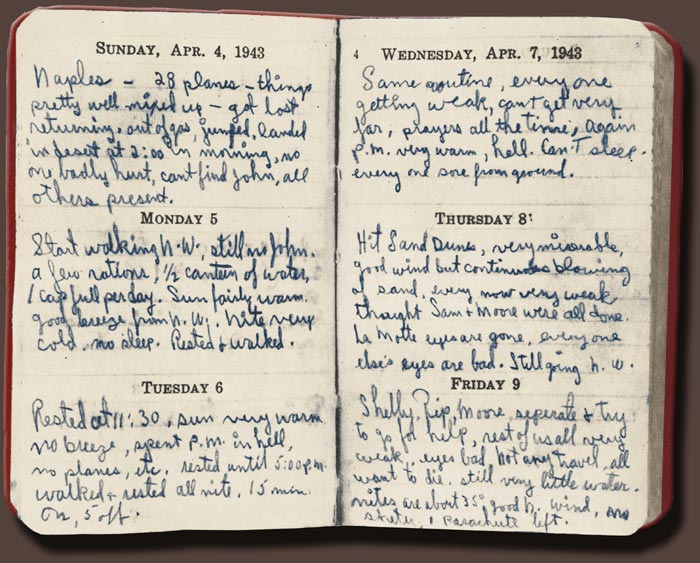
1. Write a diary. This is good practice for writing and vocabulary. You can ask the teacher in the Study Centre to check it. Write something in your diary every day. You can write about what you did last night (in the past) or what you are going to do the next day (Tomorrow, I am going to...). You can write about something you saw, something in the news, a person you met... Anything! Two or three sentences is enough.

2. Follow a twitter account or subscribe to a website. This account looks useful for elementary students: https://twitter.com/EP_Learning You could subscribe to a BBC podcast to practise your listening skills. For example, http://www.bbc.co.uk/podcasts/series/6min_gram or http://www.bbc.co.uk/podcasts/series/elt_drama It is important that you listen to the podcast several times a week. These podcasts might be useful for Chinese students: http://www.bbc.co.uk/podcasts/series/aab and http://www.bbc.co.uk/podcasts/series/suk
3. Use songs to improve your vocabulary and pronunciation. http://lyricstraining.com/ is a good website where you can listen to the song and write in the missing words, but you can just listen to a song and find the lyrics on the internet.
1. Write a diary. This is good practice for writing and vocabulary. You can ask the teacher in the Study Centre to check it. Write something in your diary every day. You can write about what you did last night (in the past) or what you are going to do the next day (Tomorrow, I am going to...). You can write about something you saw, something in the news, a person you met... Anything! Two or three sentences is enough.
2. Follow a twitter account or subscribe to a website. This account looks useful for elementary students: https://twitter.com/EP_Learning You could subscribe to a BBC podcast to practise your listening skills. For example, http://www.bbc.co.uk/podcasts/series/6min_gram or http://www.bbc.co.uk/podcasts/series/elt_drama It is important that you listen to the podcast several times a week. These podcasts might be useful for Chinese students: http://www.bbc.co.uk/podcasts/series/aab and http://www.bbc.co.uk/podcasts/series/suk
3. Use songs to improve your vocabulary and pronunciation. http://lyricstraining.com/ is a good website where you can listen to the song and write in the missing words, but you can just listen to a song and find the lyrics on the internet.
IELTS Speaking Part Two
Here is a useful link to some questions you might see in the IELTS Speaking Exam. Remember, in part two, you need to talk about the questions on the card for one minute. The topics are general English (holidays, works, families etc). You need to talk about everything on the card. Look at the tenses used: do you need to talk about the past, the present, or the future:
http://www.usingenglish.com/files/pdf/101-ielts-speaking-part-two-topic-cards-that-tie-in-with-ielts-speaking-part-one.pdf
Thursday, 2 October 2014
Elementary object questions
We use question words when we want to find out information.
The most common question words are:
what for things why for reasons where for places when for times who for people
whose for possession (Whose phone is this? It is Ryan's phone.)
how often for frequency (sometimes, always, never) how far for distance
how long for time (an hour, 30 minutes) how old for age
how much for the number of uncountable nouns (How much fruit do you eat each day?)
how many for the number of countable nouns (How many vegetable do you eat every day?)
how much for the price of countable and uncountable nouns (How much is this laptop?)
how for solving a problem (How do you spell that? How do you say that in English? How do you make kabsa?)
Here is a game you can try. Click on the correct question word:
http://a4esl.org/q/f/z/zz87mca.htm
Here are some activities:
1. https://elt.oup.com/student/headway/elementary/a_grammar/unit04/hwy_elem_unit04_2?cc=gb&selLanguage=en
2. https://elt.oup.com/student/headway/elementary/a_grammar/unit04/hwy_elem_unit04_3?cc=gb&selLanguage=en
The most common question words are:
what for things why for reasons where for places when for times who for people
whose for possession (Whose phone is this? It is Ryan's phone.)
how often for frequency (sometimes, always, never) how far for distance
how long for time (an hour, 30 minutes) how old for age
how much for the number of uncountable nouns (How much fruit do you eat each day?)
how many for the number of countable nouns (How many vegetable do you eat every day?)
how much for the price of countable and uncountable nouns (How much is this laptop?)
how for solving a problem (How do you spell that? How do you say that in English? How do you make kabsa?)
Here is a game you can try. Click on the correct question word:
http://a4esl.org/q/f/z/zz87mca.htm
Here are some activities:
1. https://elt.oup.com/student/headway/elementary/a_grammar/unit04/hwy_elem_unit04_2?cc=gb&selLanguage=en
2. https://elt.oup.com/student/headway/elementary/a_grammar/unit04/hwy_elem_unit04_3?cc=gb&selLanguage=en
Thursday, 25 September 2014
Elementary Listening
Here is a link to some exercises where you can practise listening:
http://www.talkenglish.com/Listening/ListenBasic.aspx
You need to click on the number (for example, #01), then click on Step 1. Then click on Step 2 to answer the questions. Finally, click on Step 3 and listen to the conversation again, but now you can read the text too.
Here is another link to some more listening practise: http://www.esl-lab.com/
http://www.talkenglish.com/Listening/ListenBasic.aspx
You need to click on the number (for example, #01), then click on Step 1. Then click on Step 2 to answer the questions. Finally, click on Step 3 and listen to the conversation again, but now you can read the text too.
Here is another link to some more listening practise: http://www.esl-lab.com/
Modals of obligation: Have to / Don't have to
We often want to talk about choices. For example,
1. "What do you want: a chicken sandwich or a cheese sandwich?" Here there is a choice. You can eat chicken or cheese. "You don't have to eat chicken. You can eat cheese."
2. "What do you want: a chicken sandwich or a chicken sandwich?" Here there is no choice. You can only eat chicken. "You have to eat chicken."
1. "What do you want: a chicken sandwich or a cheese sandwich?" Here there is a choice. You can eat chicken or cheese. "You don't have to eat chicken. You can eat cheese."
2. "What do you want: a chicken sandwich or a chicken sandwich?" Here there is no choice. You can only eat chicken. "You have to eat chicken."
Labels:
Blue,
Elementary,
Grammar,
Have to
Friday, 12 September 2014
Reading websites
Here are some links to some websites where you can practise reading:
1. http://www.eslfast.com/
2. http://www.agendaweb.org/reading/comprehension_easy_interm1.html
3. http://www.esl-lounge.com/student/reading-elementary.php
1. http://www.eslfast.com/
2. http://www.agendaweb.org/reading/comprehension_easy_interm1.html
3. http://www.esl-lounge.com/student/reading-elementary.php
Friday, 29 August 2014
Website: Elementary Games
Here is a link to a website with a lot of language games.
The games are mainly for children, but you can find the games fun and useful too. Try the games at Grade 2.
http://www.abcya.com/second_grade_computers.htm
These games are very useful for you:
1. http://www.abcya.com/dolch_sight_word_bingo.htm
2. http://www.abcya.com/dolch_sight_word_spelling.htm
3. http://www.abcya.com/nouns_and_verbs.htm
The games are mainly for children, but you can find the games fun and useful too. Try the games at Grade 2.
http://www.abcya.com/second_grade_computers.htm
These games are very useful for you:
1. http://www.abcya.com/dolch_sight_word_bingo.htm
2. http://www.abcya.com/dolch_sight_word_spelling.htm
3. http://www.abcya.com/nouns_and_verbs.htm
Tuesday, 19 August 2014
Grammar: Present Simple v Present Continuous
A lot of students find the differences between the present simple and the present continuous difficult. Let's remember:
Thursday, 31 July 2014
Activities on Quizlet
Quizlet is a free website where you can practise your English.
You can make cards with English words and translate them into your own language. There are many different types of cards you can make, and when you make the cards, this will help you learn. Here is a link to some cards I have made:
http://quizlet.com/TeacherRyan
The cards can help you practise vocabulary and grammar.
You can make cards with English words and translate them into your own language. There are many different types of cards you can make, and when you make the cards, this will help you learn. Here is a link to some cards I have made:
http://quizlet.com/TeacherRyan
The cards can help you practise vocabulary and grammar.
Thursday, 24 July 2014
Vocabulary: Family
Here are some games to practise vocabulary about family and people:
1.https://elt.oup.com/student/result/engelem/b_vocabulary/unit02/2b_1?cc=us&selLanguage=en
2. https://elt.oup.com/student/result/engelem/b_vocabulary/unit02/2b_2?cc=us&selLanguage=en
3. https://elt.oup.com/student/result/engelem/b_vocabulary/unit02/2c_1?cc=us&selLanguage=en
4. https://elt.oup.com/student/result/engelem/b_vocabulary/unit02/2c_3?cc=us&selLanguage=en
1.https://elt.oup.com/student/result/engelem/b_vocabulary/unit02/2b_1?cc=us&selLanguage=en
2. https://elt.oup.com/student/result/engelem/b_vocabulary/unit02/2b_2?cc=us&selLanguage=en
3. https://elt.oup.com/student/result/engelem/b_vocabulary/unit02/2c_1?cc=us&selLanguage=en
4. https://elt.oup.com/student/result/engelem/b_vocabulary/unit02/2c_3?cc=us&selLanguage=en
Tuesday, 15 July 2014
Monday, 14 July 2014
Grammar Bubbles Game
Here is a link to the grammar game we played in class:http://gamestolearnenglish.com/grammar-bubbles/
Here is another game to practise longer sentences: http://gamestolearnenglish.com/falling-clouds/
Sunday, 13 July 2014
Grammar: relative pronouns and relative clauses
Many students find relative clauses a difficult grammar point, but if you can use them correctly, you will significantly improve your writing. First, though, we need to look at relative pronouns.
There are lots of different pronouns in English and some you will already know: I, me, mine, you, yours, he, him, his etc. Relative pronouns are used to make questions and give extra information about people, places, times, things, and possessions.
Vocabulary: Food games
Here are some games you can play to learn vocabulary for food. Some of these are good for pronunciation too. Which games do you like?
1. https://elt.oup.com/student/i-spy/games/food?cc=gb&selLanguage=en
2. http://www.angles365.com/classroom/fitxers/1r2n/vegetables01.swf
3. http://www.angles365.com/classroom/fitxers/1r2n/food/fruitmemory.swf
4. http://www.angles365.com/classroom/fitxers/3r/food/vegetables2.swf
5. http://gamestolearnenglish.com/likes/
6. http://gamestolearnenglish.com/food/
1. https://elt.oup.com/student/i-spy/games/food?cc=gb&selLanguage=en
2. http://www.angles365.com/classroom/fitxers/1r2n/vegetables01.swf
3. http://www.angles365.com/classroom/fitxers/1r2n/food/fruitmemory.swf
4. http://www.angles365.com/classroom/fitxers/3r/food/vegetables2.swf
5. http://gamestolearnenglish.com/likes/
6. http://gamestolearnenglish.com/food/
Tuesday, 17 June 2014
Vocabulary: Holidays
There are lots of exercises about holidays here: http://www.esolcourses.com/topics/holidays-and-travel.html You can practise vocabulary, grammar, reading and listening.
Here is a short reading test: http://www.esolcourses.com/uk-english/elementary-course/travel-and-holidays/travel-and-holidays-reading.html
There are many more exercises on their homepage:
1. Elementary http://www.esolcourses.com/content/topicsmenu/elementary.html
2. Lower Intermediate http://www.esolcourses.com/content/topicsmenu/pre-intermediate.html
Here is a short reading test: http://www.esolcourses.com/uk-english/elementary-course/travel-and-holidays/travel-and-holidays-reading.html
There are many more exercises on their homepage:
1. Elementary http://www.esolcourses.com/content/topicsmenu/elementary.html
2. Lower Intermediate http://www.esolcourses.com/content/topicsmenu/pre-intermediate.html
Monday, 16 June 2014
Listening tests: Lower Intermediate and above
There are lots of listening exercises on this website: http://www.esl-lab.com/
The actors have American accents and may use some American vocabulary. Although some listenings are labelled "easy", I think they are suitable for Lower Intermediate and above. They are quite short.
If you like the website, do tell Randall, the website owner.
| http://www.girlytwitter.com/source/Young_puppy_listening_to_music_on_head_phones.jpg |
If you like the website, do tell Randall, the website owner.
Vocabulary: Transport and Holidays
Grammar: Present simple or Present continuous
We have two present tenses you need to practise: the present simple and the present continuous. We use them to talk about different things and we make them in different ways. Look at the picture:
Thursday, 29 May 2014
Grammar: Be
The verb be is very important in English. Some languages don't have the verb be, but in English, we use it a lot. It's important that you learn this verb.
Subscribe to:
Posts (Atom)