Showing posts with label Grammar. Show all posts

Thursday, 2 October 2014

Elementary object questions

We use question words when we want to find out information.
The most common question words are:

what    for things     why     for reasons        where  for places       when   for times       who     for people     
whose  for possession  (Whose phone is this? It is Ryan's phone.)


how often     for frequency (sometimes, always, never)     how far        for distance
how long      for time  (an hour, 30 minutes)                       how old        for age
how much   for the number of uncountable nouns (How much fruit do you eat each day?)
how many   for the number of countable nouns (How many vegetable do you eat every day?)
how much   for the price of countable and uncountable nouns (How much is this laptop?)
how              for solving a problem  (How do you spell that? How do you say that in English? How do you make kabsa?)

Here is a game you can try. Click on the correct question word:
http://a4esl.org/q/f/z/zz87mca.htm

Here are some activities:
1. https://elt.oup.com/student/headway/elementary/a_grammar/unit04/hwy_elem_unit04_2?cc=gb&selLanguage=en
2. https://elt.oup.com/student/headway/elementary/a_grammar/unit04/hwy_elem_unit04_3?cc=gb&selLanguage=en

Thursday, 25 September 2014

Modals of obligation: Have to / Don't have to

We often want to talk about choices. For example,

1. "What do you want: a chicken sandwich or a cheese sandwich?" Here there is a choice. You can eat chicken or cheese. "You don't have to eat chicken. You can eat cheese."

2. "What do you want: a chicken sandwich or a chicken sandwich?" Here there is no choice. You can only eat chicken. "You have to eat chicken."


Thursday, 31 July 2014

Activities on Quizlet

Quizlet is a free website where you can practise your English.


You can make cards with English words and translate them into your own language. There are many different types of cards you can make, and when you make the cards, this will help you learn. Here is a link to some cards I have made:

http://quizlet.com/TeacherRyan

The cards can help you practise vocabulary and grammar.

Sunday, 13 July 2014

Grammar: relative pronouns and relative clauses

Many students find relative clauses a difficult grammar point, but if you can use them correctly, you will significantly improve your writing. First, though, we need to look at relative pronouns.

There are lots of different pronouns in English and some you will already know: I, me, mine, you, yours, he, him, his etc. Relative pronouns are used to make questions and give extra information about people, places, times, things, and possessions.

Thursday, 24 April 2014

Grammar: Possessives

We often want to talk about things people own or possess. We can do this by using a possessive adjective, or by using the person's name or job +'s (apostrophe s) .

Tuesday, 15 April 2014

Grammar: Past tense practice

When we want to talk about actions which started and finished in the past, we use a past simple tense. Verbs can be regular or irregular.


Tuesday, 28 January 2014

Grammar: -ed/-ing adjectives

Do you feel confused when you see different adjectives? Do you think adjectives are confusing? You are not alone.
There are many different suffixes (final letters) for adjectives. Among the most common are: -ive (positive), -ible (possible), -able (comfortable), -ish (babyish), and -ed/-ing (confused/confusing). Let's look at -ed/-ing adjectives.

Saturday, 26 October 2013

Grammar: Test

Here is a useful link to a grammar test. Every time you take the test, the computer generates a different one.
Oxford Living Grammar is published by Oxford University. You can buy the book to practise. I like the book because there is always a context, a story where you can see how the grammar works in every day situations. However, I think that the grammar explanations are not always very clear.

Anyway, here is the link: https://elt.oup.com/student/livinggrammar/pre/a_test?cc=gb&selLanguage=en You can also test at other levels (elementary, intermediate). There is no explanation here of the grammar: you will need to write down or print your wrong answers and then try and find out more in the Study Centre. Good luck!

Thursday, 17 October 2013

Grammar: Present simple

Welcome to Manchester! What do you know about the city?


    Manchester is nearly 2000 years old, so has a very long and complex history. It is probably best-known for its music and its two world-famous football teams. Manchester United play at Old Trafford and most students want to visit the stadium when they are here. Manchester City's home is the Etihad Stadium which is in east Manchester. Old Trafford is the larger stadium, and holds 10,000 more spectators.
    There are many music venues in the city. The area behind Piccadilly Gardens is The Northern Quarter and there are lots of places where you can listen to local bands.
    A very popular area in Manchester is Rusholme, where there are many Arabic and Indian restaurants. People go there with their friends and eat different kinds of food. Many buses go to Rusholme. During Eid celebrations, the area gets extremely busy: buses use different routes and lots of people walk along the streets and make a lot of noise.
    Most students think that the people in Manchester are friendly, so you don't need to worry about asking people questions. A lot of people think that it rains all the time in Manchester, but it really doesn't rain every day. I hope that you have a great time while you are here!


Look at the verbs in the text. What tense are the verbs?

Saturday, 28 September 2013

Grammar: Countable or Uncountable Quiz


This is a link to a quiz about countable and uncountable nouns: http://a4esl.org/q/j/ck/ch-countnouns.html There are 107 questions!! All you need to do is click on Countable or Non-countable.

Saturday, 14 September 2013

Grammar: Making Tenses

We all need a hand occasionally to help us get what we want. Even a genius like Michelangelo needed help to create his famous sculpture, David, which was made from marble for the city of Florence.
The statue doesn't look simple because it is extremely detailed.
Michelangelo was working continuously on the sculpture for two years while the city was waiting for him to finish it.
Millions of people have seen the perfect statue.

Verbs are like blocks of marble: they need help to make them come to life.

Ryan: "You, my students, are all Michelangelo."     Students: "Wow!"

Friday, 6 September 2013

Grammar: Modals of Obligation (Must/ Have to)

We often want to talk about choice. Sometimes we can make a choice but many times we cannot. There are rules and laws that mean we cannot choose to do what we always want to do.

The shop is closing down: the shop will not exist anymore. The shop is selling all its clothes in order to make as much money as possible. It has no choice. All the clothes must be sold. Everything must go!

We use must and have to to talk about choices.

Wednesday, 28 August 2013

Grammar: The Present Perfect

Sometimes we want to talk about things that happened in the past:

I was born in Lancaster. When I was eighteen, I went to university in Manchester. 

but sometimes we want to talk about things that started in the past and connect to the present:

I live in Manchester. I have lived in Manchester since I started university five years ago.

We use have/has + past participle to make the present perfect tense.

To talk about the length of time, we can use for or since. We use for to talk about the period of time, and since to talk about the start time.

Remember for= how long      since= start

I have lived in Manchester for five years, since I started university.
I have been in Manchester for forty days. It's really good!
I have studied in Manchester since September. It's great!

Let's try and put this into a song!

Wednesday, 31 July 2013

Grammar: Past simple v Past continuous

Ryan and Aziz are having a conversation.

Can you complete the sentences using the verbs in brackets and the correct past tense:


Ryan:        I'm sorry I'm late. I __________ (miss) the bus.
Aziz:         But I ________ (ring) four times!
Ryan:        I know. I've just seen all my missed calls. I __________ (sleep) when you ________ (call).
Aziz:         And you __________ (not hear) the phone?
Ryan:        No. Then the next time you ________ (ring), I ___________ (have) a shower. I ________ (not hear) the phone because I ____________ (listen) to the radio and _________ (sing) along.
Aziz:         Ok, but I __________ (call) you again at 8 o'clock.
Ryan:        Yeah, I know. My phone __________ (charge) upstairs and I _________ (miss) your call.
Aziz:         Then I __________ (ring) again half an hour later.
Ryan:        Yeah, I ___________ (run) for the bus and I couldn't answer my phone in time. It ___________ (still ring) while I ____________  (pay) for my ticket but then it __________ (stop). Anyway, I'm really sorry I'm late. Anyway, why ______________ (you ring) me?
Aziz:         Oh, I just ___________ (want) to tell you I was going to be late because I had missed the bus. In fact, I've only just arrived myself. I got here about five minutes ago!

The answers are after the jump:

Grammar: Past simple v Past continuous

Read the story:

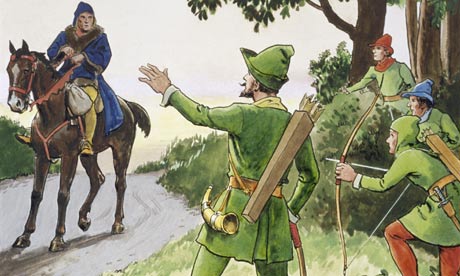
I went to Nottingham to visit my sister. While I was riding on my horse through the forest, some men appeared. They were wearing green clothes and they threatened me with bows and arrows. They stole all my money. They were shouting and singing while they were robbing me. The leader of the thieves blew on his horn and some more people appeared. They were dirty and miserable and looked very poor. The leader gave my money to the poor people!


Do you know this story? Who were the men in green? What was the name of the leader? Did he really exist?

Thursday, 25 July 2013

Conversation: In the restaurant

Look at this restaurant conversation that takes place in a restaurant in Manchester:
Jane:   Is this a good place to eat?
Ryan:  I think so. I've been here many times.
Jane:   What do you recommend?
Ryan:  Well, there are lots of things to try if you like spicy food. Do you want a starter or just a main course?
Jane:    If we're ordering starters, I will have the chicken satay.
Ryan:   OK. So if you order the chicken satay, I'll have the dumplings.
Jane:    Oh, if you have the dumplings, can I have one?
Ryan:   Yeah, if we order starters, we'll share them.

Waiter: Can I get you something to drink?
Jane:    Do you have any orange juice?
Waiter: Sorry, I'm afraid not. We do have some pineapple juice, though.
Jane:    Fine. I'll have a pineapple juice unless you want to share a bottle of wine?
Ryan:   No, you go for the pineapple juice. I'll have a bottle of Kirin Ichiban beer, please.
Waiter: Of course. One beer and one pineapple juice.

Jane:    Oh dear. There's so much choice. I don't know what to have. It all looks so strange and unusual.
Ryan:   You always say you want to try new things?! If you didn't want to come here, where would you prefer to go?
Jane:    I don't know. They just have so many new things. If they had sweet and sour chicken, I would order that. 
Ryan:  But they don't, so you can't. Why don't you try the Pad Thai? It's a famous and traditional dish from Thailand. If you don't like it, I'll eat it.  Or, you could try a curry? If you ordered the curry, you wouldn't need to order rice because rice is included.
Jane:   I'll try the Pad Thai. But if I don't like it, you will have to eat it.
Ryan:  No problem.

Grammar: First and Second Conditionals

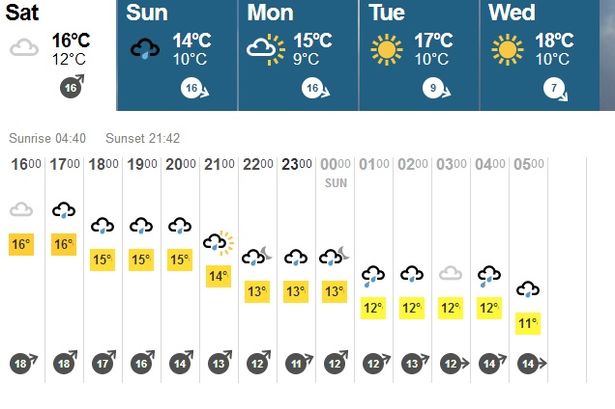
We know that it always rains in Manchester, so when it rains, you need an umbrella. Sometimes, though, we want to talk about things that are not definitely true but probably (80/90%) true. Sometimes, we want to talk about things that are possibly, but unlikely to be, true (20/30%). Look at the weather forecast for next week:

Today is Saturday. On Sunday, it's definitely going to rain. On Monday, there will probably be some sunshine. On Tuesday and Wednesday, it will be warm and sunny: it's unlikely to rain on Tuesday and Wednesday.

To talk about things that are definite,   we use a zero conditional
To talk about things that are probable, we use a first conditional
To talk about things that are unlikely,   we use a second conditional

Zero:      When it rains, people stay at home.
First:       If it's a nice day on Monday, I will go out with my friends.
Second:  Tuesday is going to be a nice day, but if it rained, I would stay at home.

Wednesday, 24 July 2013

Grammar: Zero conditionals


Look at this conversation:

Ryan: What do you do during the day?
Aziz:   I come to college.
Ryan:  Good answer. How do you get here?
Aziz:   On foot. But this is Manchester so sometimes it rains. If it rains, I don't walk.
Ryan:  So what happens if it rains?
Aziz:   Well, if it rains, I get the bus. Actually, to be honest, most days I get the bus.

If it rains, I get the bus. Why does Aziz get the bus? Because it rains.

There are two actions here: Aziz gets the bus and it rains. But Aziz gets the bus because it rains: this is the result of the rain, this is what happens when it rains.

When we talk about actions (it rains) and results (Aziz gets the bus), we use a conditional sentence: