Thursday, 1 May 2014
Wednesday, 30 April 2014
Spelling: Plurals
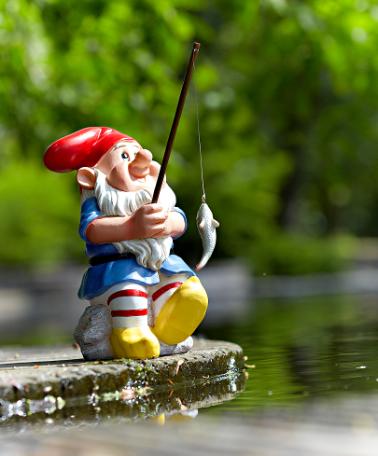
Do you need to practise spelling plural nouns? This game can help you.
Remember, for most words + s
If the word ends with vowel + y + s
If the word ends with consonant +y + ies
If the word ends with sh, ch, s, z, x or o + es
This is true for 3rd person verbs too: Carlos watches TV. Martha goes to the cinema. Saddam studies every day.
Here is the link for the game: http://www.bbc.co.uk/skillswise/game/en16plur-game-plural-fishing
![]() |
| (image: http://fallingrock1.files.wordpress.com/2012/03/gnome-fishing.jpg) |
If the word ends with vowel + y + s
If the word ends with consonant +y + ies
If the word ends with sh, ch, s, z, x or o + es
This is true for 3rd person verbs too: Carlos watches TV. Martha goes to the cinema. Saddam studies every day.
Here is the link for the game: http://www.bbc.co.uk/skillswise/game/en16plur-game-plural-fishing
Labels:
Blue,
Elementary,
Plurals,
Spelling
Thursday, 24 April 2014
Grammar: Possessives
We often want to talk about things people own or possess. We can do this by using a possessive adjective, or by using the person's name or job +'s (apostrophe s) .
Wednesday, 23 April 2014
Grammar: a/an/the
We often need to use a, an or the when we talk about nouns.
We use a with consonant sounds. For example, computer, pen, teacher, banana
We use an with vowel sounds. For example, orange, apple, umbrella.
![]() | |
| (image: http://www.kienthucduhoc.com) |
We use an with vowel sounds. For example, orange, apple, umbrella.
Reading: People and places
In the class, we read about Isabel from Peru. She lives in Arequipa:
![]() |
| (image: http://www.ucsp.edu.pe) |
Tuesday, 22 April 2014
Vocabulary: Nationalities
Here are some links to practise vocabulary for nationalities:
1. https://elt.oup.com/student/englishfile/elementary/b_vocabulary/bank02/?cc=gb&selLanguage=en
2. https://elt.oup.com/student/result/engelem/b_vocabulary/unit03/?cc=gb&selLanguage=en
![]() | |||
| (image: http://englishinaction1-stlisieux.blogspot.co.uk/2013/01/unit-3-countries-nationalities-languages.html) |
2. https://elt.oup.com/student/result/engelem/b_vocabulary/unit03/?cc=gb&selLanguage=en
Labels:
Countries,
Elementary,
Green,
Nationalities,
Vocabulary
Saturday, 19 April 2014
Game: Any/Some/Countable Nouns
Here is a little game to practise any/some/a/an: https://elt.oup.com/student/result/engelem/c_games/game_03?cc=gb&selLanguage=en
Have or Has?
Have is an irregular verb in the present: I have, you have, he has. we have, they have. A lot of students find this difficult to remember.
The negative of he has is ..... ?
Present simple tense
We use the present simple tense to talk about facts which are always true, and to talk about daily routines and habits. For example;
I get up in the morning at 7 o'clock, and I go to work at 8.15. We have a break around 10 o'clock and the lesson finishes at 11.30. I teach an elective class until 1 o'clock. In the afternoon, I plan the next lesson and mark homework, but on Wednesdays, I go to university.
Vocabulary: Food
Here is a link to some games and activities to practise food and drink vocabulary: https://elt.oup.com/student/result/engelem/b_vocabulary/unit06/?cc=gb&selLanguage=en
Can you name all the vegetables in the picture?
Here is another link to more practise: https://elt.oup.com/student/englishfile/elementary/b_vocabulary/bank14/?cc=gb&selLanguage=en
Can you name all the vegetables in the picture?
Here is another link to more practise: https://elt.oup.com/student/englishfile/elementary/b_vocabulary/bank14/?cc=gb&selLanguage=en
Tuesday, 15 April 2014
Grammar: Past tense practice
When we want to talk about actions which started and finished in the past, we use a past simple tense. Verbs can be regular or irregular.
Thursday, 3 April 2014
People: I/you/he/she/it/we/they (Personal pronouns)
When we use verbs, we need to say who is doing the action. Sometimes it is one person (singular), sometimes it is more than one person (plural).
Verbs
We use verbs to talk about actions. For example, fly, arrive, come, study, read, write
We use verbs to talk about different times and when we do something. For example, in the past (yesterday), in the present (today) or in the future (tomorrow). These different times are called tenses, so we have a past tense, a present tense and a future tense.
Sometimes we also want to say how long we do something: every day, for a short time, at the moment. For this we need to use different types of tense. For example, we use a present simple tense to talk about things we do every day, and we use a present continuous tense to talk about things we are doing at the moment.
The most common English verbs are:
be have do say get make know go take see come think look want give use find tell work ask seem feel try leave call

Saying hello and goodbye
There are lots of different ways to say hello and goodbye in English. You need to think about the situation: is it formal (like in an office, or when you meet someone for the first time "Good morning. My name's Ryan.") or is it informal (like when you meet your friends "Hi Ryan! How's it going?")?
Listen to the conversation here: https://elt.oup.com/student/headway/elementary/f_everydayenglish/hwy_elem_dialogue01?cc=gb&selLanguage=en
For practise, change which parts you want to see. Click on Part A. Now you can only see Part B. Listen again. Can you write Part A?
Now click the parts you want to hear. Click on Part B. Listen again. Can you speak the missing words from Part B?
There is some useful vocabulary and a short test here: http://www.bbc.co.uk/worldservice/learningenglish/radio/specials/1142_greeting/page2.shtml Listen to the recording and practise the vocabulary the next time you talk to people. Do you need formal or informal language?
Listen to the conversation here: https://elt.oup.com/student/headway/elementary/f_everydayenglish/hwy_elem_dialogue01?cc=gb&selLanguage=en
For practise, change which parts you want to see. Click on Part A. Now you can only see Part B. Listen again. Can you write Part A?
Now click the parts you want to hear. Click on Part B. Listen again. Can you speak the missing words from Part B?
There is some useful vocabulary and a short test here: http://www.bbc.co.uk/worldservice/learningenglish/radio/specials/1142_greeting/page2.shtml Listen to the recording and practise the vocabulary the next time you talk to people. Do you need formal or informal language?
Wednesday, 26 February 2014
Practising Punctuation: BBC Skillswise
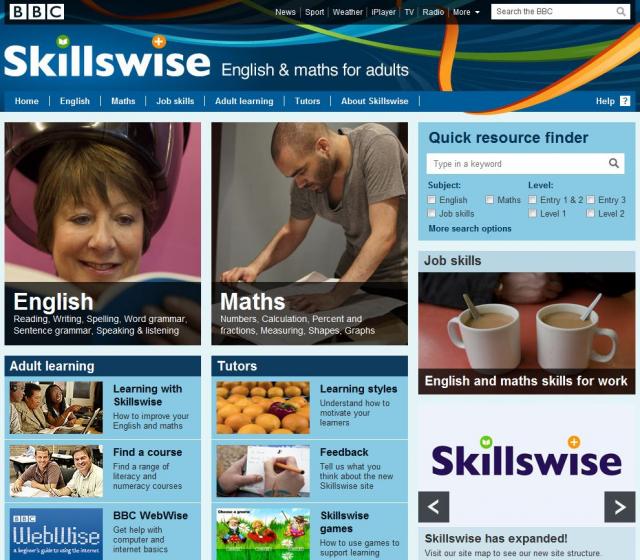
Here is a link to the punctuation practise we did this morning: http://www.bbc.co.uk/skillswise/topic/punctuation
There are many more activities on the BBC Skillswise website. Explore the website and let me know what you think. Which activities do you find the most useful and enjoyable? Is there anything you want to practise more in class? Leave a comment and let me know.
Tuesday, 28 January 2014
Vocabulary Games: Describing people
There are lots of games on different websites to help you learn vocabulary. Here are some online games you can try to help you learn some adjectives you can use to describe people. The website is called www.manythings.org
Grammar: -ed/-ing adjectives
Do you feel confused when you see different adjectives? Do you think adjectives are confusing? You are not alone.
There are many different suffixes (final letters) for adjectives. Among the most common are: -ive (positive), -ible (possible), -able (comfortable), -ish (babyish), and -ed/-ing (confused/confusing). Let's look at -ed/-ing adjectives.
Monday, 13 January 2014
State verbs
Q: Which famous company uses incorrect grammar in their advertisements?
In English, we can use verbs to talk about actions or feelings and emotions. Verbs that describe actions, for example, run, write, sing, are called action or dynamic verbs. We can use them in both simple and continuous tenses: Sorry, I can't stop! I am running a race!/ I run two miles every day.
Friday, 13 December 2013
Important Vocabulary
It's important to remember that you cannot learn lots of new words. You need to learn the most common words and be able to spell them correctly.
Here is a quiz of the 100 most common words in English: http://quizicon.com/100-Most-Common-English-Words-Quiz.html How many can you guess?
There are different lists of the most common words, but they are all very similar. They say that half of all written English uses the same 100 words. The top 300 words are used in 65% of all written English. Here are some word lists:
http://www.englishclub.com/vocabulary/common-words-100.htm
http://www.duboislc.net/EducationWatch/First100Words.html
http://www.world-english.org/english500.htm
Try and learn these common words and spell them correctly. They are the most important words to learn.
Here is a quiz of the 100 most common words in English: http://quizicon.com/100-Most-Common-English-Words-Quiz.html How many can you guess?
There are different lists of the most common words, but they are all very similar. They say that half of all written English uses the same 100 words. The top 300 words are used in 65% of all written English. Here are some word lists:
http://www.englishclub.com/vocabulary/common-words-100.htm
http://www.duboislc.net/EducationWatch/First100Words.html
http://www.world-english.org/english500.htm
Try and learn these common words and spell them correctly. They are the most important words to learn.
Subscribe to:
Posts (Atom)